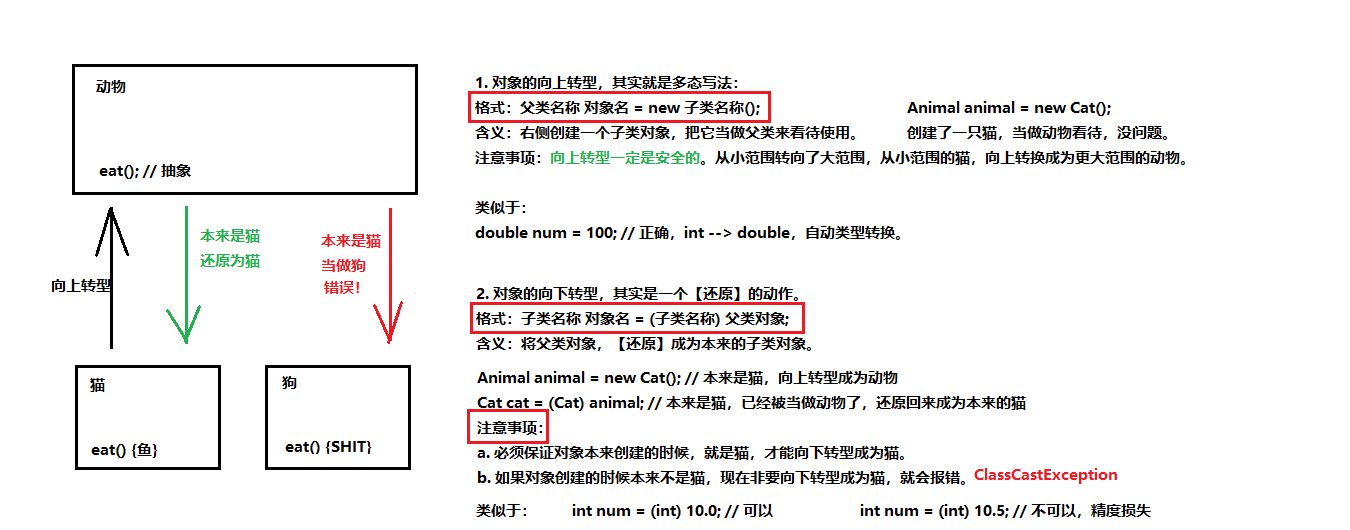
1 public abstract class Animal {
2
3     public abstract void eat();
4 }
 1 public class Cat extends Animal{
 2
 3     @Override
 4     public void eat() {
 5         System.out.println("猫吃鱼");
 6     }
 7
 8     public void catchMouse(){
 9         System.out.println("猫抓老鼠");
10     }
11 }
 1 public class Dog extends Animal{
 2     @Override
 3     public void eat() {
 4         System.out.println("狗是骨头");
 5     }
 6
 7     public void watchHouse(){
 8         System.out.println("狗看家");
 9     }
10 }
 1 /*
 2 * 向上转型一定是安全的,正确的,没问题的,但是也有一个弊端:
 3 *       对象一旦向上转型为父类,那么就无法调用子类原本特有的内容*/
 4 public class Demo01Main {
 5
 6     public static void main(String[] args) {
 7
 8         //对象的向上转型,就是: 父类引用指向子类对象
 9         Animal animal = new Cat();
10         animal.eat();
11
12         //animal.catchMouse();  //错误写法
13
14         //向下转型,进行"还原"动作
15         Cat cat = (Cat) animal;
16         cat.catchMouse();
17
18         //下面是错误的向下转型
19         //本来new的是一只猫,非要把它当狗
20         //java.lang.ClassCastException  类转换异常
21         Dog dog = (Dog) animal;  //错误写法  , 编译不会报错,但是运行有异常
22     }
23 }
 1 /*
 2 * 如何才能知道一个父类引用的对象,本来是什么子类?
 3 *
 4 * 格式:
 5 *       对象 Instanceof  类名称
 6 * 这将得到一个boolean布尔值结果,也就是判断前面的对象能不能当做后面类型的实例*/
 7 public class Demo02Instanceof {
 8
 9     public static void main(String[] args) {
10         Animal animal = new Cat();  //本来是一只猫
11
12         if(animal instanceof Cat){
13             Cat cat = (Cat) animal;
14             cat.catchMouse();
15         }
16         if (animal instanceof Dog){
17             Dog dog = (Dog) animal;
18             dog.watchHouse();
19         }
20
21         giveMeAnPet(new Dog());
22     }
23
24     public static void giveMeAnPet(Animal animal){
25         if(animal instanceof Cat){
26             Cat cat = (Cat) animal;
27             cat.catchMouse();
28         }
29         if (animal instanceof Dog){
30             Dog dog = (Dog) animal;
31             dog.watchHouse();
32         }
33     }
34 }


 浙公网安备 33010602011771号