

HashMap
HashMap
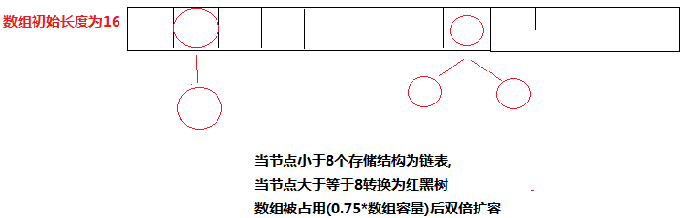
- 结构: 数组+链表(红黑树)
-
放数据:
public V put(K key, V value) {
return putVal(hash(key), key, value, false, true);
} -
key的hash(): key==null,其hash为0,不为null其值为key的高16位异或key的低16位(h右移位16的值),这样会把这个hashcode的位的用上,因为接下来通过hash值判断数组的位置时使用的是01111这样的与运算,如果直接使用hashcode会使得hashcode的高位没有意义
hashcode与equals的关系: equals相等则hashcode一定相等,反之不一定,因为两个key相同的键值对数据就是hashcode相同但是equals不同
static final int hash(Object key) {
int h;
return (key == null) ? 0 : (h = key.hashCode()) ^ (h >>> 16);
} -
链表节点:
static class Node<K,V> implements Map.Entry<K,V> {
final int hash;
final K key;
V value;
Node<K,V> next;Node(int hash, K key, V value, Node<K,V> next) {
this.hash = hash;
this.key = key;
this.value = value;
this.next = next;
} -
数组大小: 默认16,最大值1 << 30
static final int DEFAULT_INITIAL_CAPACITY = 1 << 4;
static final int MAXIMUM_CAPACITY = 1 << 30; -
数组扩容: 条件: 当前数组的容量被使用了0.75倍之后进行2倍扩容
static final float DEFAULT_LOAD_FACTOR = 0.75f;
-
链表转变: 当链表节点增加大于等于8时转换成红黑树,减少到6时有红黑树转换成普通链表
static final int TREEIFY_THRESHOLD = 8;
static final int UNTREEIFY_THRESHOLD = 6; -
putVal
final V putVal(int hash, K key, V value, boolean onlyIfAbsent,
boolean evict) {
Node<K,V>[] tab; Node<K,V> p; int n, i;
if ((tab = table) == null || (n = tab.length) == 0)
n = (tab = resize()).length;//通过resize()初始化或者加倍数组大小//节点为空
if ((p = tab[i = (n - 1) & hash]) == null)//用01111与hash进行与运算(计算机执行比较快,目的与取模一样)
tab[i] = newNode(hash, key, value, null);//当该数组位置没有元素,直接把Node节点赋给该数组位置//节点非空
else {
Node<K,V> e; K k;//添加元素的key == p.key
if (p.hash == hash &&((k = p.key) == key || (key != null && key.equals(k))))
e = p;//添加元素的key != p.key,放入红黑树
else if (p instanceof TreeNode)
e = ((TreeNode<K,V>)p).putTreeVal(this, tab, hash, key, value);//添加元素的key != p.key,放入普通链表
else {
for (int binCount = 0; ; ++binCount) {
if ((e = p.next) == null) {
p.next = newNode(hash, key, value, null);
if (binCount >= TREEIFY_THRESHOLD - 1) // 节点大于等于8时由链表转换为红黑树
treeifyBin(tab, hash);
break;
}
if (e.hash == hash && ((k = e.key) == key || (key != null && key.equals(k))))//遍历链表时,存在相同key节点
break;
p = e;
}
}
//上面的for循环如果发现相同的key的节点就把e置为改节点,否则置为null
if (e != null) { // existing mapping for key
V oldValue = e.value;
if (!onlyIfAbsent || oldValue == null)
e.value = value;
afterNodeAccess(e);
return oldValue;
}
}
++modCount;
if (++size > threshold)//扩容: size为数组所使用的大小,threshold为0.75*数组容量
resize();
afterNodeInsertion(evict);
return null;为什么数组两倍扩容? ---->因为需要使用数组长度(n)-1进行与计算,需要生成后位都是1的数,初始容量为16(10000),两倍扩容后就可以产生这个效果(例:10000-1=01111,100000000-1=011111111)
-
初始化或者加倍数组大小
final Node<K,V>[] resize() {
Node<K,V>[] oldTab = table;
int oldCap = (oldTab == null) ? 0 : oldTab.length;
int oldThr = threshold;
int newCap, newThr = 0;
if (oldCap > 0) {
if (oldCap >= MAXIMUM_CAPACITY) { //已经达到最大数组,不扩容了
threshold = Integer.MAX_VALUE;
return oldTab;
}
else if ((newCap = oldCap << 1) < MAXIMUM_CAPACITY &&oldCap >= DEFAULT_INITIAL_CAPACITY)
newThr = oldThr << 1; // double threshold
}
else if (oldThr > 0) // initial capacity was placed in threshold
newCap = oldThr;
else { // zero initial threshold signifies using defaults
newCap = DEFAULT_INITIAL_CAPACITY;
newThr = (int)(DEFAULT_LOAD_FACTOR * DEFAULT_INITIAL_CAPACITY);
}
if (newThr == 0) {
float ft = (float)newCap * loadFactor;
newThr = (newCap < MAXIMUM_CAPACITY && ft < (float)MAXIMUM_CAPACITY ?
(int)ft : Integer.MAX_VALUE);
}
threshold = newThr;
@SuppressWarnings({"rawtypes","unchecked"})
Node<K,V>[] newTab = (Node<K,V>[])new Node[newCap];
table = newTab;
if (oldTab != null) {
//遍历数组
for (int j = 0; j < oldCap; ++j) {
Node<K,V> e;
if ((e = oldTab[j]) != null) {
oldTab[j] = null;
if (e.next == null)
newTab[e.hash & (newCap - 1)] = e;
//拆分红黑树
else if (e instanceof TreeNode)
((TreeNode<K,V>)e).split(this, newTab, j, oldCap);
//拆分链表
else { // preserve order
Node<K,V> loHead = null, loTail = null;
Node<K,V> hiHead = null, hiTail = null;
Node<K,V> next;
do {
next = e.next;
if ((e.hash & oldCap) == 0) {//链表节点迁移只有两种可能,原地不动和往后移oldCap
if (loTail == null)
loHead = e;
else
loTail.next = e;
loTail = e;
}
else {
if (hiTail == null)
hiHead = e;
else
hiTail.next = e;
hiTail = e;
}
} while ((e = next) != null);
if (loTail != null) {
loTail.next = null;
newTab[j] = loHead;
}
if (hiTail != null) {
hiTail.next = null;
newTab[j + oldCap] = hiHead;
}
}
}
}
}
return newTab;
}数组扩容后节点迁移
扩容前: 0x0101 & 01111 = 0101
扩容后: 0x0101 & 11111 = x0101
x只能为0或1,当为0时节点保持不动,当为1时,节点位置增加了10000也就是oldCap(扩容前数组的容量)
-
设置初始容量
initialCapacity = (存储元素个数 / 负载因子) + 1
-
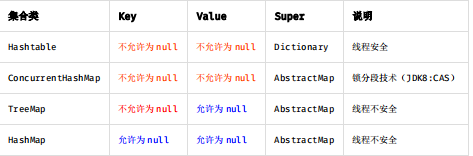
null值(<<阿里巴巴Java开发手册>>)
![]()

 浙公网安备 33010602011771号