

C++ 之动态存储和类
特殊的成员函数
C++自动提供了下面这些成员函数
- 默认构造函数,如果没有定义构造函数
- 默认析构函数,如果没有定义
- 复制构造函数,如果没有定义
- 赋值运算符,如果没有定义
- 地址运算符,如果没有定义
C++ 11还提供了两个特殊的成员函数:移动构造函数和移动赋值运算符
copy构造函数
何时调用:新建一个对象并将其初始化为同类现有对象时, 复制构造函数都将被调用。
下面4种声明都会调用复制构造函数。
StringBad ditto(motto);
StringBad metoo = motto;
String also = StringBad(motto);
StringBad * pStringBad = new StringBad(motto);
中间的2种声明可能会使用复制构造函数直接创建metoo和also, 也可能使用复制构造函数生成一个临时对象, 然后将零时对象的内容赋给metoo和also, 这取决于具体的实现。 最后一种声明使用motto初始化一个匿名对象,并将新对象的地址赋给pstring指针。
按值传递意味着创建原始变量的一个副本。编译器生成临时对象时, 也将使用复制构造函数。
默认的复制函数的功能
默认的复制构造函数将逐个复制非静态成员(成员复制也称为浅复制),复制的是成员的值。
StringBad sailor = sports;
等效下面的代码:
StringBad sailor;
sailor.str = sports.str;
sailor.len = sports.len;
浅复制会带来 两次释放指针的错误。
解决这一问题使用深度复制(deep copy).
StringBad::StringBad(const StringBad & st)
{
	num_strings ++ ;
	len = st.len;
	str = new char[len+1];
	std::strcpy(str,st.str);
}
与复制构造函数类似,复制运算符的隐式实现也对成员进行逐个复制。 如果成员本身就是类对象,则程序将使用为这个;类定义的赋值运算符来复制该成员, 但静态数据成员不受影响。
Class_name &Class_name::operator=(const Class_name &);
编写赋值运算符:
StringBad & String::operator=(const StringBad & st)
{
	if(this == &)
	{
	  return *this;
	}

	delete [] str;
	len = st.len;
	str = new char[len+1];
	std:: strcpy(str,st.str);
	return *this;
}
C++11的空指针
str = nullstr;
头文件
string1.h
#ifndef STING1_H_
#define STING1_H_

#include <iostream>
using std::istream;
using std::ostream;

class String
{

private:
    char *str;
    int len;
    static int num_strings;
    static const int CINLIM = 80; // 字符长度限制

public:
    // 构造函数
    String(const char *s);
    String();
    String(const String &s);
    ~String();

    // 成员方法
    int length() const { return len; };

    // 重载运算符成员方法
    String &operator=(const String &);
    String &operator=(const char *);

    char &operator[](int i);
    const char &operator[](int i) const;

    // 重载运算符友元函数
    friend bool operator>(const String &str1, const String &str2);
    friend bool operator<(const String &str1, const String &str2);
    friend bool operator==(const String &str1, const String &str2);

    friend ostream & operator<<(ostream & os, const String &str);
    friend istream & operator>>(istream & is, String &str);

};
#endif
string1.cpp源文件
#include "string1.h"
#include <cstring>
using std::cout;
using std::cin;
using std::endl;

int String::num_strings = 0;
int String::HowMany()
{
    return num_strings;
}

String::String(const char* s)
{
    cout << "const char* s构造" << endl;
    len = std::strlen(s);
    str = new char[len + 1];
    std::strcpy(str,s);
    num_strings ++ ;
}

String::String()
{
    cout << "无参构造" << endl;
    len = 4;
    str = new char[1];
    str[0] = '\0';
    num_strings ++;
}

String::String(const String & st)
{
    cout << "拷贝(复制)构造函数" <<endl;
    len = st.len;
    str = new char[len+1];
    std::strcpy(str,st.str);
    num_strings ++;
}

String::~String()
{
    --num_strings;
    delete [] str;
}

// 成员运算符
String & String::operator=(const String & s)
{
    if(this == &s)
    {
        return *this;
    }

    delete [] str;
    len = s.len;
    str = new char[len +1];
    std::strcpy(str,s.str);
    return * this;
}

String & String::operator=(const char * s)
{
    delete [] str;
    len = std::strlen(s);
    str = new char[len  + 1];
    std::strcpy(str,s);
    return *this;
}

// 元素可读可写
char & String::operator[](int i)
{
    return str[i];
}

// 元素只读
const char & String::operator[](int i) const
{
    return str[i];
}


// 重载运算符友元函数
bool operator<(const String &str1, const String &str2)
{
     return std::strcmp(str1.str, str2.str) < 0;
}

bool operator>(const String &str1, const String &str2)
{

     return str2 < str1;
}

bool operator==(const String &str1, const String &str2)
{

     return std::strcmp(str1.str, str2.str) == 0;
}

ostream & operator<< (ostream & os, const String &str)
{
    os << str.str;
    return os;
}

istream & operator>>(istream & is, String &str)
{
    char temp[String::CINLIM];
    is.get(temp,String::CINLIM);
    if (is)
        str = temp;

    // 如果到达文件尾或get(char *, int)读取的是一个空行,导致输入失败, istream的值将置为false
    while(is && is.get() !='\n')
        continue;
    return is;
}
sayings1.cpp 主文件
#include <iostream>
#include "string1.h"
const int ArSize = 10;
const int Maxlen = 81;


int main(int argc, char const *argv[])
{
    using namespace std;

    String name;
    // name = "hello";
    cout << "Enter your name: " ;
    cin >> name;
    cout << '\n';
    cout << "your name is :"<< name;

    String saying[ArSize];
    char temp[Maxlen];

    int i;
    for(i = 0; i < ArSize; i++)
    {
        cout << i +1 << ":";
        cin.get(temp, Maxlen);

        while(cin && cin.get() != '\n')
        {
            continue;
        }

        if(!cin || temp[0] == '\0')
        {
            break;
        }

        else
        {
            saying[i] = temp;
        }
    }

    int total = i;
    if(total > 0)
    {
        cout << "Here are your sayings: \n" ;
        for(i =0 ; i< total; i++)
        {
            cout << saying[i][0] << ": " << saying[i] << endl;
        }

        int shortest = 0;
        int first = 0;

        for(i = 1; i < total ; i ++)
        {
            if(saying[i].length() < saying[shortest].length())
            {
                shortest = i;
            }

            if(saying[i] < saying[first])
            {
                first = i ;
            }
        }

        cout << "Shortest saying :\n" << saying[shortest] << endl;
        cout << "First alphabetically :\n" << saying[first] << endl;
        cout << "This program used " << String ::HowMany() << "String objects. Bye.\n";
    }
    else{
        cout << "No Input! Bye. \n";
    }

    system("pause");
    return 0;
}
注意: 较早的get(chat *, int)版本在读取空行后,返回的值不为false。 然而,对于这些版本来说, 如果读取的是一个空行, 则字符串中第一个字符将是一个空字符。
if(!cin || temp[0] == '\0')
        {
            break;
        }
// if语句中第一个条件检测空行, 第二个条件用于旧版本的实现中检测空行。
#ifndef A_H_
#define A_H_
#include <iostream>
using namespace  std;

class A {

public:
  A(){
    cout << "A default constructor"<< endl;
  }

  A(const A & a)
  {
     cout << "A copy constructor"<< endl;
  }

};

#endif

A  test( A & a)
{
    return a;
}

int main(int argc, char const *argv[])
{
    A a;
    test(a);
    return 0;
}
输出:
A default constructor
A copy constructor
#include <iostream>
using namespace std;

class A
{
private:
  int a;
  int b;

public:
  A();
  A(int a, int b);
  A operator=(const A & a);
  A(const A &a);
  void test();
};

A::A()
{
  cout << "default constructor \n";
  this-> a= 0;
  this->b = 0;
}

A::A(int a, int b)
{
  cout << a << " \t "<< b<<endl;
  this -> a = a;
  this->b = b;
}

A A::operator=(const A & a)
{
   cout << "copy" << endl;
   return a;
}
A::A(const A & a)
{
  cout << "copy constructor" << endl;

}

void A::test()
{
  cout << this->a << " \t" << this->b << endl;
}


A test()
{
  A a;
  cout << typeid(a).name() << endl;  // 1A
  return a;
}


int main(int argc, char const *argv[])
{
  A a(2, 3);
  A b = test(); // 底层做了优化 并没有调用复制构造函数
  cout << typeid(b).name() << endl;  // 1A
  b.test();

  return 0;
}
定位new运算符
定位new 运算符可以在分配内存时能够指定内存位置
#include <iostream>
#include <string>
#include <new>
using namespace std;
const int BUF = 512;

class JustTesting
{
private:
    string words;
    int number;
public:
    JustTesting(const string & s = "Justing Testing", int n = 0)
    {words = s; number = n; cout << words << " constructed. \n";}

    ~JustTesting(){cout << words << " destroyed\n";}
    void show() const { cout << words << ", " << number << endl; }
};

int main(int argc, char const *argv[])
{
    char * buffer = new char[BUF];

    JustTesting *pc1, *pc2;
    pc1 = new (buffer)JustTesting; // 在buffer中放置对象
    pc2 = new JustTesting("Heap1",20); // 在堆中放置对象

    cout << "Memory block address : \n" <<"buffer: "<< (void *)buffer << " heap: " << pc2 << endl;
    cout << "Memory contents: \n" ;

    cout << pc1 << ": ";
    pc1 ->show();
    cout << pc2 << ": ";
    pc2 ->show();

    JustTesting *pc3, *pc4;
    pc3 = new (buffer)JustTesting("Bad Idea",6);
    pc4 = new JustTesting("heap2", 10);

    cout << "Memory contents: \n" ;
    cout << pc3 << ": ";
    pc3 ->show();
    cout << pc4 << ": ";
    pc4->show();

    delete pc2; // 释放 heap1
    delete pc4; // 释放 heap2
    delete [] buffer;
    cout << "Done \n";

    return 0;
}
使用定位new运算符时存在两个问题:1. 首先在创建第二个对象时, 定位new 运算符使用一个新对象来覆盖用于第一个对象的内存单元。2.
其次, 将delete用于pc2和pc4时, 将自动调用pc2和pc4指向对象调用的析构函数, 然而使用, 将delete[] 用于buffer时, 不会为使用定位new运算符创建的对象调用析构函数。
解决方法: 1. 要使用不同的内存单元, 内存单元不能发生重叠。需要提供两个位于缓冲区的不同的地址, 并确保这两个内存单元不重叠。
例如,可以这样做:
pc1 = new (buffer)JustTesting;
pc2 = new (buffer + sizeof(JustTesting))JustTesting("Better Idea",6);
delete运算符可以与常规的new运算符配合使用,但不能与定位new运算符配合使用。
问题2的解决方案是,显式地为使用定位new 运算符创建的对象调用析构函数。需要显式地调用析构函数。
pc3->~JustTesting(); // 销毁pc3指向的对象
pc1->~JustTesting(); // 销毁pc3指向的对象
修复后的代码
#include <iostream>
#include <string>
#include <new>
using namespace std;
const int BUF = 512;

class JustTesting
{
private:
    string words;
    int number;
public:
    JustTesting(const string & s = "Justing Testing", int n = 0)
    {words = s; number = n; cout << words << " constructed. \n";}

    ~JustTesting(){cout << words << " destroyed\n";}
    void show() const { cout << words << ", " << number << endl; }
};

int main(int argc, char const *argv[])
{
    char * buffer = new char[BUF];

    JustTesting *pc1, *pc2;
    pc1 = new (buffer)JustTesting; // 在buffer中放置对象
    pc2 = new JustTesting("Heap1",20); // 在堆中放置对象

    cout << "Memory block address : \n" <<"buffer: "<< (void *)buffer << " heap: " << pc2 << endl;
    cout << "Memory contents: \n" ;

    cout << pc1 << ": ";
    pc1 ->show();
    cout << pc2 << ": ";
    pc2 ->show();

    JustTesting *pc3, *pc4;
    pc3 = new (buffer)JustTesting("Bad Idea",6);
    pc4 = new JustTesting("heap2", 10);

    cout << "Memory contents: \n" ;
    cout << pc3 << ": ";
    pc3 ->show();
    cout << pc4 << ": ";
    pc4->show();

    delete pc2; // 释放 heap1
    delete pc4; // 释放 heap2

    pc3->~JustTesting();
    pc1->~JustTesting();

    delete [] buffer;
    cout << "Done! \n";

    return 0;
}
队列模拟
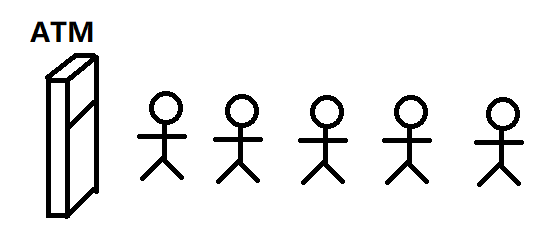
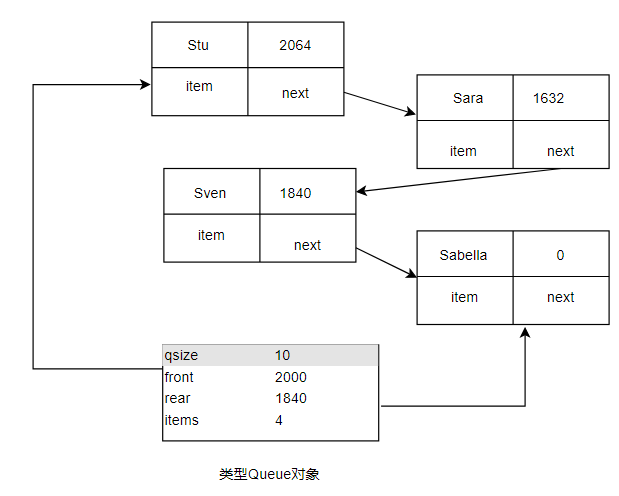
要求:
限制等待人数
对顾客排队等待时间进行预测
1/3的顾客只需要1分钟就能获得服务,1/3的顾客需要3分钟,另外1/3的顾客需要3分钟。顾客到达的时间是随机的,但每个小时使用ATM的顾客数量相当稳定。 工程的另外两个任务是: 设计一个表示顾客的类; 编写一个程序来模拟顾客和队列之间的交互。
队列类
- 队列存储有序的项目队列
- 队列能容纳的项目数有一定的限制
- 应当能够创建空队列
- 应当能够检查队列是否为空
- 应该能够检查队列是否为满
- 能够在队尾添加项目
- 在队首删除项目
- 应当能够确定队列中项目数
在类声明中声明的结构、类或枚举被称为是被嵌套在类中, 其作用域为整个类。这种声明不会创建数据对象, 而只是指定了可以在类中使用的类型。
如果声明时在类的私有部分进行的, 则只能在这个类使用被声明的类型;如果声明是在公有部分进行的, 则可以从类的外部通过作用域解析运算符使用被声明的类型。例如: 如果Node是在Queue类的公有部分声明的,则可以在类的外面声明Queue::Node类型的变量。
对于const数据成员,必须在执行到构造函数之前,即创建对象时进行初始化。使用成员初始化列表,效率更高。
ATM模拟:
程序允许用户输入3个数: 队列的最大长度、程序模拟的持续性时间(单位为小时)以及平均每小时的客户数。
- 判断是否来了新客户,如果来了,且队列没有满,则将它添加到队列中,否则拒绝客户入队。
- 如果没有客户在进行交易,则选取队列中的第一个客户。 确定该客户的已等候的时间,并将wait_time计数器设置为新客户所需的处理时间。
- 如果客户正在处理中,则将wait_time计算器减1
- 记录各种数据,如获得服务的客户数目、被拒绝的客户数目、排队等候的累积时间以及累积的队列长度。、
RAND_MAX是rand()函数返回的最大值(cstdlib.h)
classy::Classy(int n , int m):mem1(n), mem2(0),mem3(n*m + 2)
{

}

// 这种格式只能用于构造函数
// 必须用这种格式来初始化非静态const数据成员
// 必须用这种格式初始化引用数据成员

数据成员初始化顺序与它们出现在类声明中的顺序相同, 与初始化器中的排列顺序无关。

C++ 11 允许 在类声明成员属性的时候,直接赋值。 这与使用初始化列表等价。
queue.h头文件
#ifndef QUEUE_H_
#define QUEUE_H_

class Customer
{
private:
    long arrive;  // 客户到达的时间
    int processtime; // 交易处理的时间
public:
    Customer():arrive(0),processtime(0)
    {}

    void set(long when);
    long when() const {return arrive;}  // 获取到达时间
    int ptime() const {return processtime;} // 获取处理时间
};


typedef Customer Item;
class Queue
{
private:
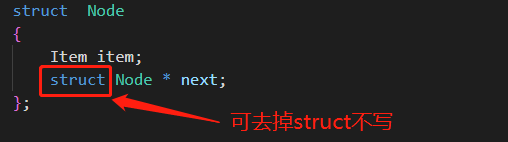
    struct  Node
    {
        Item item;
        struct Node * next;
    };

    enum{Q_SIZE = 10};

    Node *front;
    Node *rear;
    int items ; // 当前队列中items数
    const int qsize; // 当前队列中items的最大数目
    Queue(const Queue & q):qsize(0){}
    Queue & operator=(const Queue & q){return *this;}

public:
    Queue(int qs = Q_SIZE); // 创建一个队列, 队列的长度最大为Q_SIZE
    ~Queue();

    bool isempty() const;
    bool isfull() const;

    int queuecount() const ;
    bool enqueue(const Item &item); // 将item添加到对尾
    bool dequeue(Item & item); // 从队头移除item
};
#endif
queue.cpp文件
#include "queue.h"
#include <cstdlib>  // rand() 函数 头文件
#include <iostream>

Queue::Queue(int qs):qsize(qs)
{
    front = rear = NULL;
    items = 0;
}

Queue::~Queue()
{
    Node * temp;
    while(front != NULL)
    {
        temp = front;
        front = front->next;
        delete temp;
    }
}

bool Queue::isempty() const
{
    return items == 0;
}

bool Queue::isfull() const
{
    return items == Q_SIZE;
}

int Queue::queuecount() const
{
    return items;
}

bool Queue::enqueue(const Item & item)
{
    if(isfull())
    {
        return false;
    }

    Node *add = new Node; // 创建一个节点
    add ->item = item;
    add->next = nullptr;

    items ++;

    if(front == NULL)
    {
        front = add;
    }else
    {
        rear->next = add;
    }

    rear = add;
    return true;
}

bool Queue::dequeue(Item &item)  // 出队
{
    if(front == NULL)
    {
        return false;
    }

    item = front -> item; // 队头
    items --;
    Node *temp = front;
    front = front -> next;
    delete temp;
    if(items == 0 )
    {
        rear = NULL;
    }
    return true;
}


void Customer::set(long when)
{

    processtime = std::rand() % 3 + 1;   // 模拟处理时间
    std::cout << "processtime="<<processtime << std::endl;
    arrive = when;
}
bank.cpp文件
#include <iostream>
#include <cstdlib>
#include <ctime>
#include "queue.h"
using namespace std;

const int MIN_PER_HR = 60;  // 60分钟 1小时
bool newcustomer(double x);  //  是否来了新客户

int main(int argc, char const *argv[])
{
    srand(time(0));

    int qs;
    // 输入队列的最大元素个数
    cout << "Enter max size of queue: ";
    cin >> qs;

    Queue line(qs);
    // 输入模拟的小时数
    cout << "Enter the number of simulation hours: " ;
    int hours ;
    cin >> hours;

    // 每分钟执行一次模拟
    long cyclelimit = MIN_PER_HR * hours;  // 一个小时60分钟  一共多少分钟
    // 输入每小时客户的平均数量
    cout <<"Enter the average number of customers per hour" <<endl;
    double perhour;
    cin >> perhour;

    double min_per_cust ; // 两次到达的平均时间
    min_per_cust = MIN_PER_HR / perhour;

    Item temp;  // 新的用户数据
    long turnways = 0; // 拒绝客户数
    long customers = 0 ; // 加入到队列数
    long served = 0; // 服务客户数
    long sum_line = 0; // 累计队伍长度
    int wait_time = 0;  // 单个用户的等待服务的时间
    long line_wait = 0; // 排队等候的累计时间

    // 运行模拟
    for(int cycle = 0; cycle < cyclelimit ; cycle ++)  // 1分钟循环一次  平均每6分钟来1次顾客
    {
        if(newcustomer(min_per_cust))
        {
            if(line.isfull())
            {
                turnways ++ ;
            }else
            {
                customers ++ ;
                temp.set(cycle); // 设置到达的时间
                line.enqueue(temp); // 入队
            }

            if(wait_time <= 0 && !line.isempty())  // 对列不空
            {
                line.dequeue(temp);
                wait_time = temp.ptime(); // 等待时间
                line_wait += cycle - temp.when();
                served ++ ;
            }

            if(wait_time > 0)
            {
                wait_time -- ;
            }
            sum_line += line.queuecount();
        }
    }


    // 报告结果
    if(customers > 0)
    {
        cout << "customers accepted:" << customers << endl;
        cout << "customers served:" << served << endl;
        cout << "turnaways: " << turnways <<endl;
        cout << "average queue size: " ;
        cout.precision(2);
        cout.setf(ios_base::fixed, ios_base::floatfield);
        cout << (double)sum_line/cyclelimit << endl;
        cout << "average wait time: " << (double) line_wait /served << " minutes\n" ;
    }
    else
    {
        cout << "No customers! \n" << endl;
    }
    cout << "Done! \n" ;
    return 0;
}


bool newcustomer(double x)
{
    return (rand() * x / RAND_MAX) < 1;
}

 浙公网安备 33010602011771号